
Add a Feature for Delenta Coaching Platform
Reflection Journal
The Problem
Offering reflection activities after coaching sessions that didn't feel forced for those who were seeking more engagement. The challenge was creating meaningful touchpoints without adding to the burden clients might feel.
What needed to be solved?
Research Insights
Key findings that shaped the solution
Reflection Drives Progress
Flexibility Over Structure
Reassuring Presence
Personalized Engagement
Self-Directed Accountability
Clear Expectations
Clients want optional, flexible resources (articles, micro-learning, assessments) that enhance the coaching experience, but too many materials quickly feel burdensome.
Clients see reflection as the most meaningful driver of progress, but they lack consistent ways to capture or revisit those reflections without it feeling like homework.
Clients rarely contact their coach between sessions, yet they feel reassured simply knowing that access is possible. Support is as much about presence as communication.
No two clients engage the same way. Personality, learning style, and schedule determine what engagement methods feel motivating versus stressful.
Clients want accountability that's strong enough to keep them moving but flexible enough to avoid dependency. Structured check-ins work best when they feel self-directed.
Coaching engagement hinges on expectation-setting. Mismatched assumptions about what coaching is (versus mentoring or therapy) lead to disengagement or disappointment.
The Solution
Designing the reflection journey
User Flow
The reflection journey was designed to feel natural and optional. Users can choose to reflect with or without prompts, ensuring the experience never feels like mandatory homework.
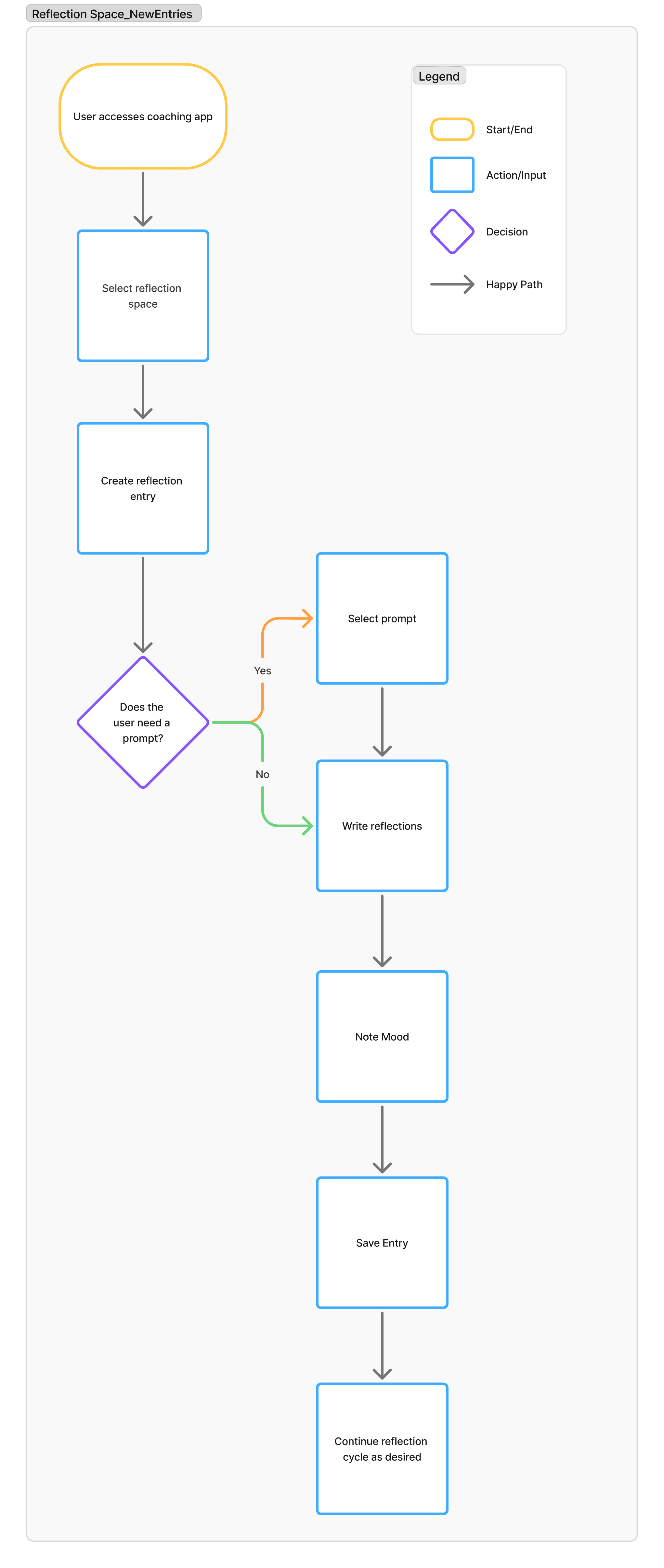
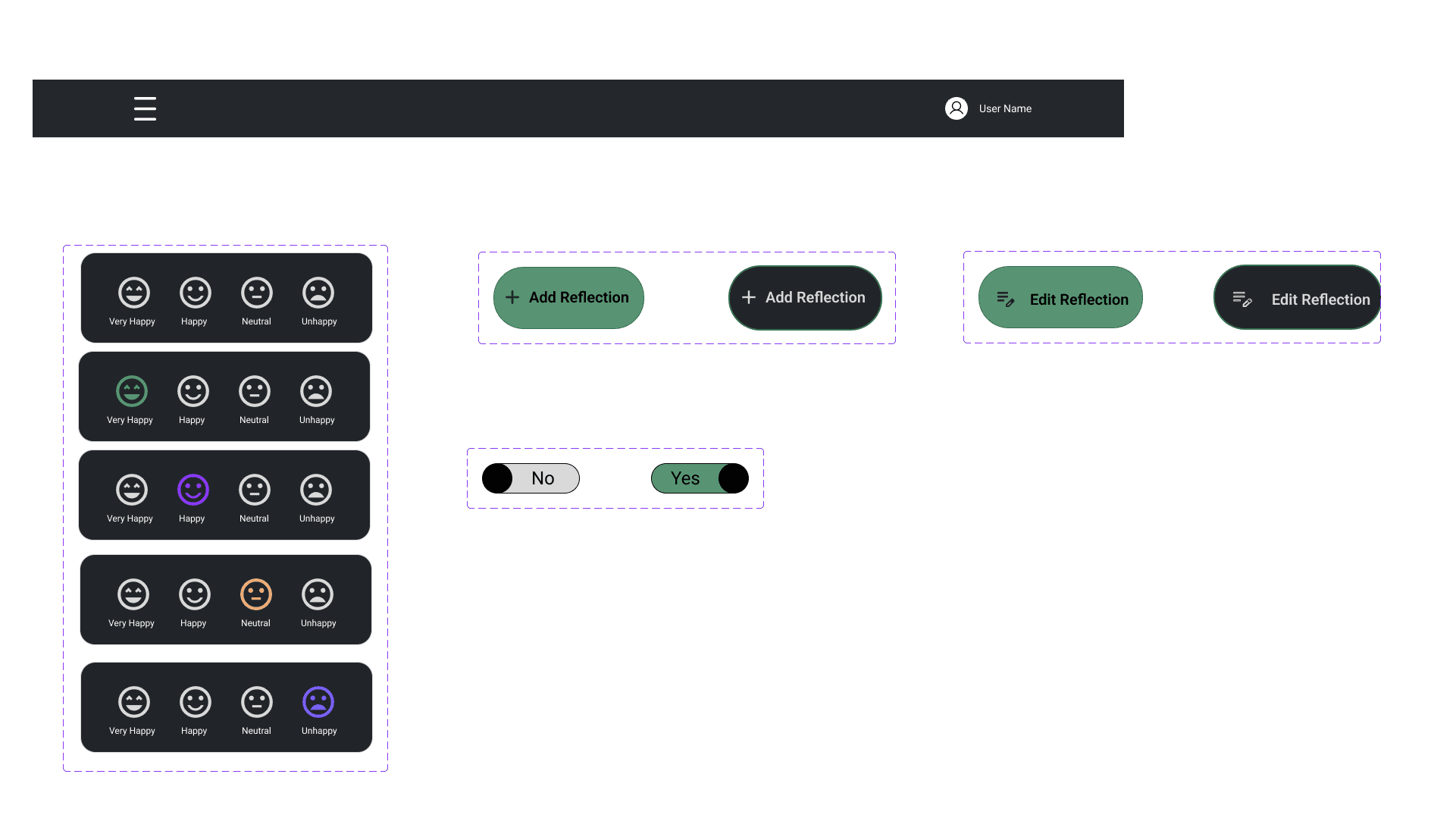
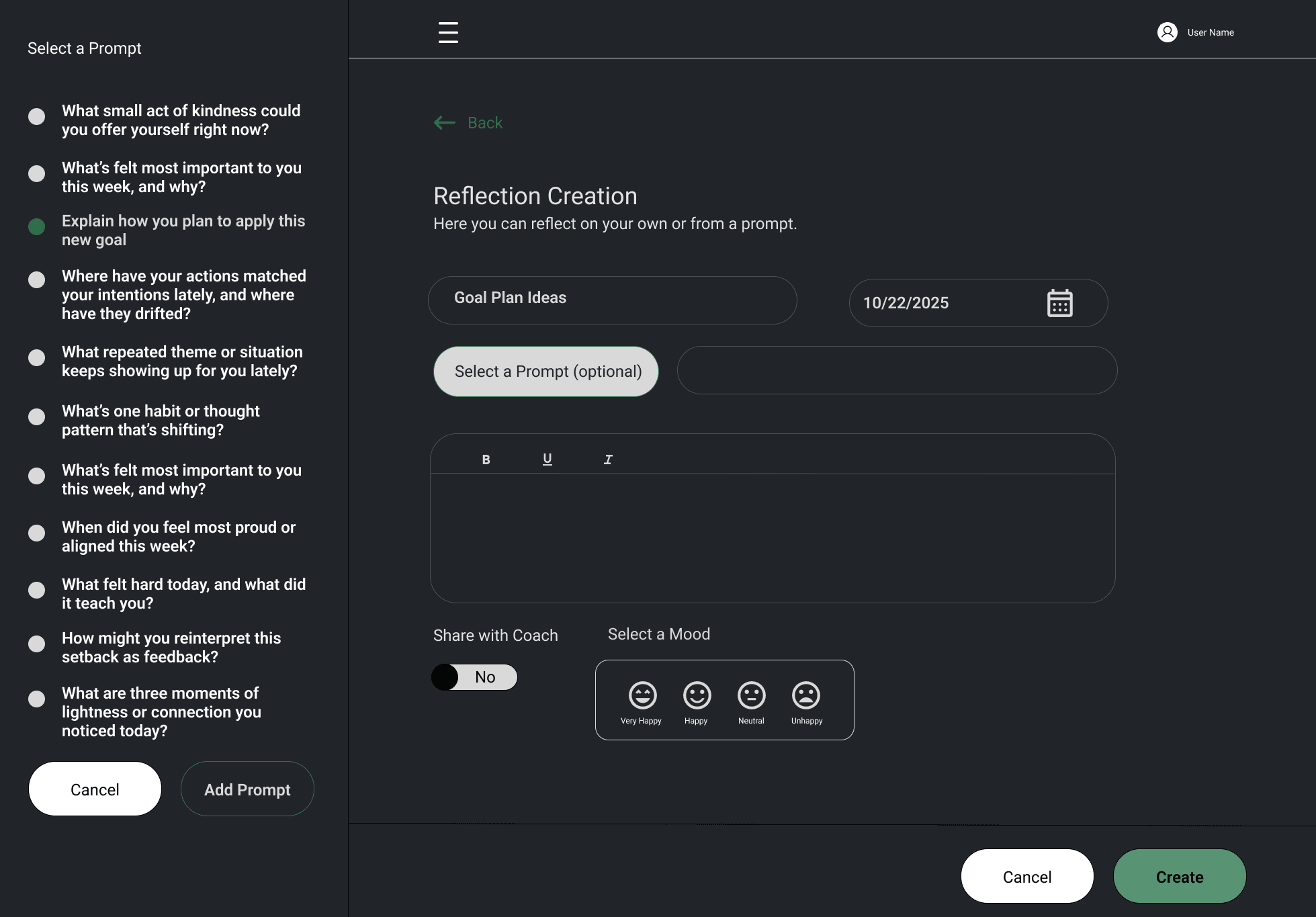
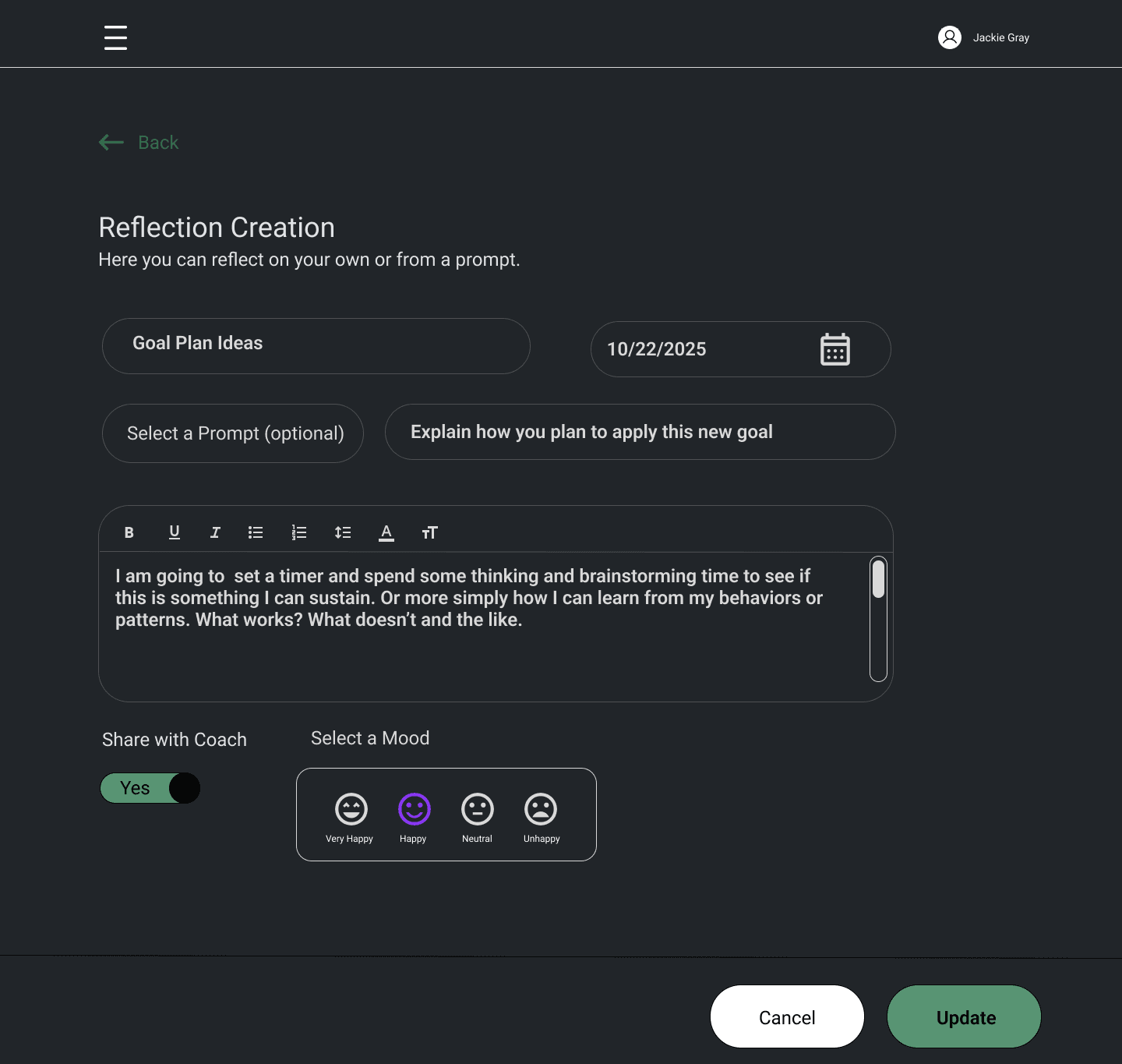
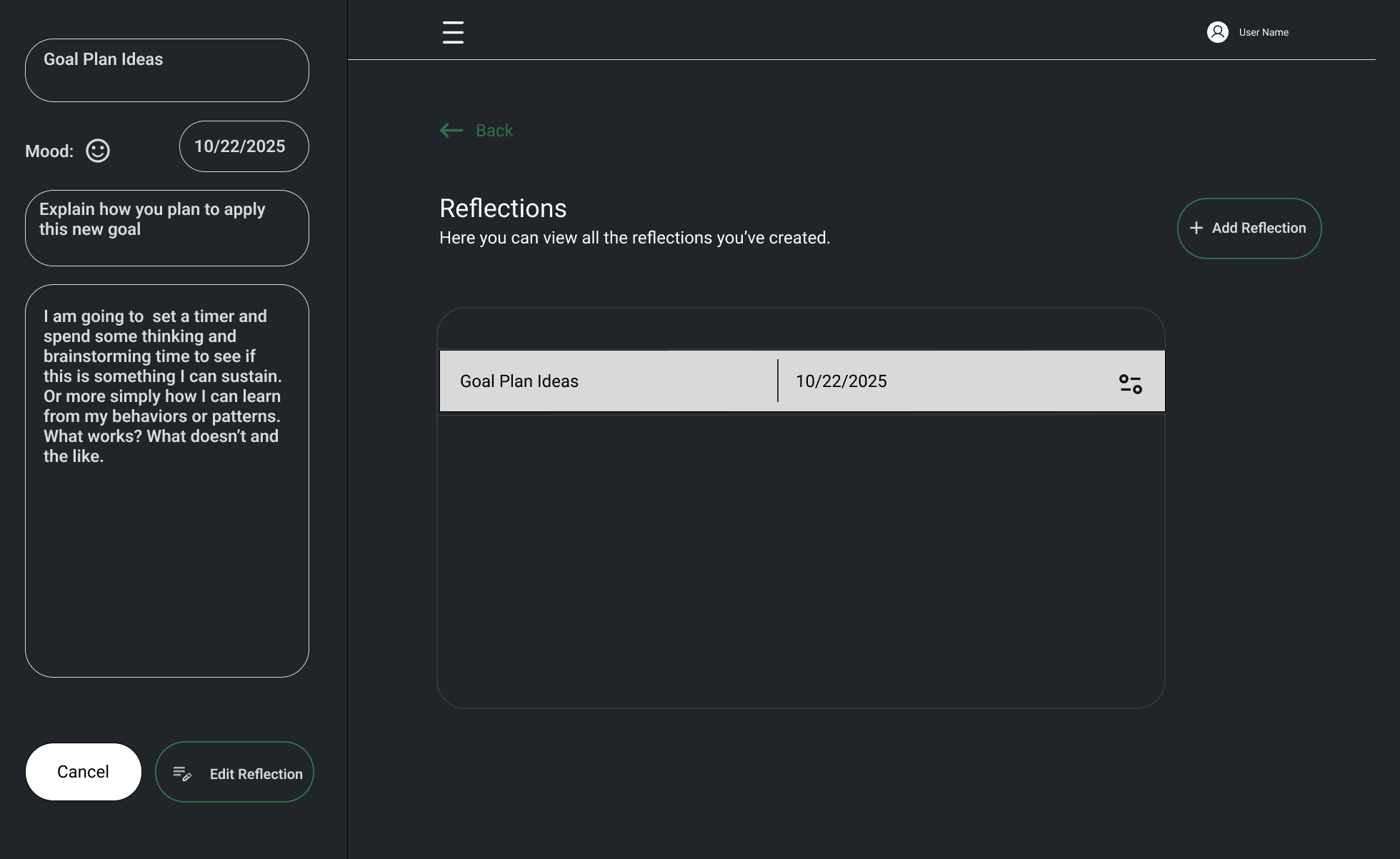
The interface focuses on simplicity and flexibility, allowing users to engage with prompts when they're helpful or write freely when they're not.
Key Screens and Components
Focus Area
My main focus was on low-fidelity design — specifically designing how I wanted the prompt library and view reflection features to look and feel. This allowed me to iterate quickly on the core experience.
User-centered Approach
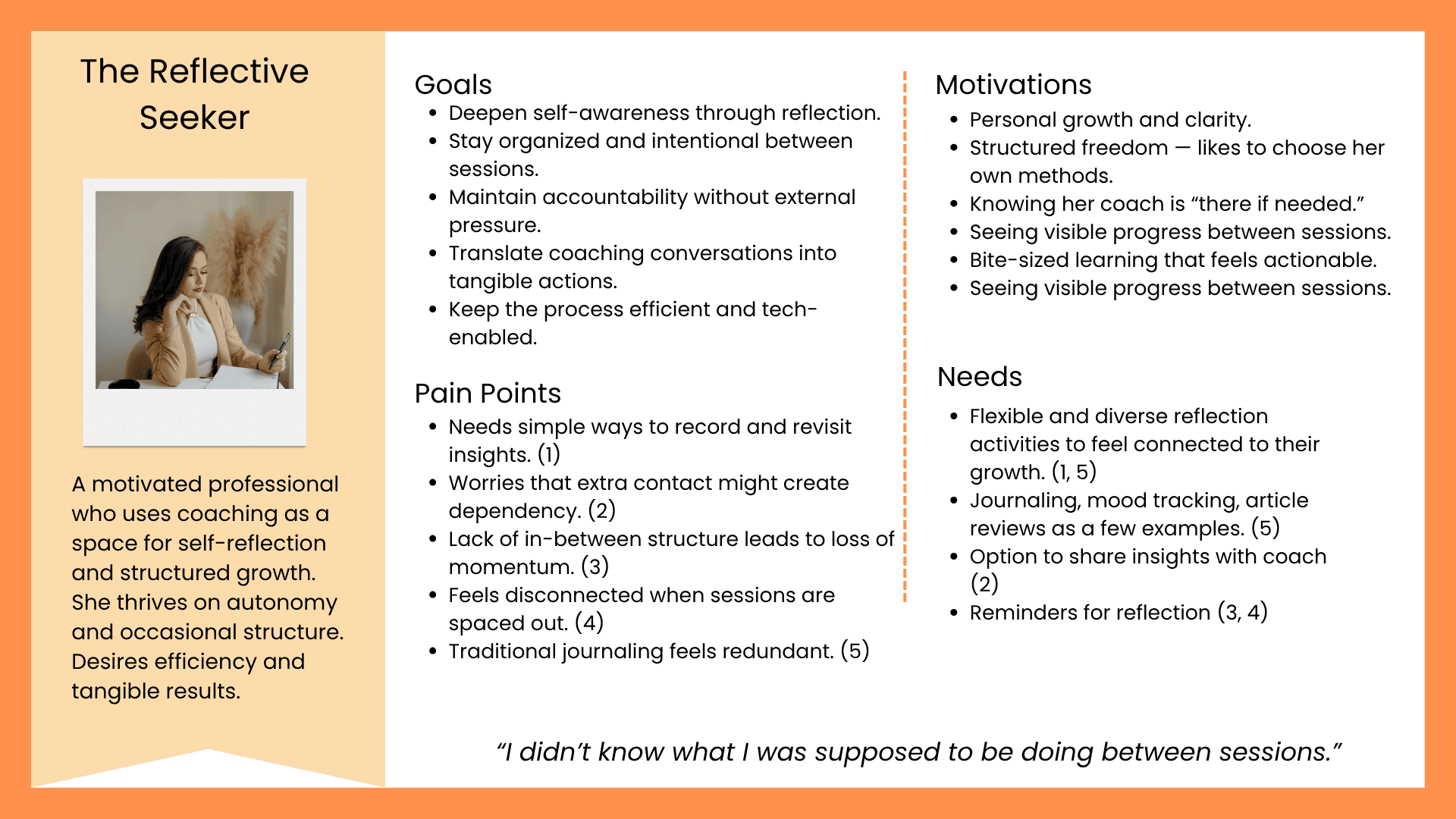
I carried the persona pain points and needs as the driving factors in the creation of the user flows. Every design decision traced back to solving a real user need.
From concept to low-fidelity
Design Process
Obstacles and learning along the way
Challenges Encountered
Validation Gaps
Finding Testers
The main challenge was not validating my own ideas between the project brief and interviews. I learned the importance of staying objective and letting the research guide the solution rather than confirming my assumptions.
Recruiting the right participants for testing proved challenging. This highlighted the importance of building a research network early in the project.
Growth & Key Takeaways
Building on Existing Foundations
Industry Passion
I've learned about how to add a project idea to continue the development of a set of features, versus the start-everything-from-scratch model. This was invaluable experience in working within existing design systems and user ecosystems.
As coaching is going to be my future career industry, I loved being able to dive into some of the mechanics of a coaching relationship. This personal connection made the research phase especially meaningful.
What this project taught me

This takeaway will shape how I approach future projects, focusing on clarity and usability over complexity.
Key Lesson: Simplicity is Elegant
"Keeping things simpler is so much nice. Nothing too fancy, simple works and is elegant."